Indoor Air Quality
Is Your Home Protected Against Lahore’s Smog?
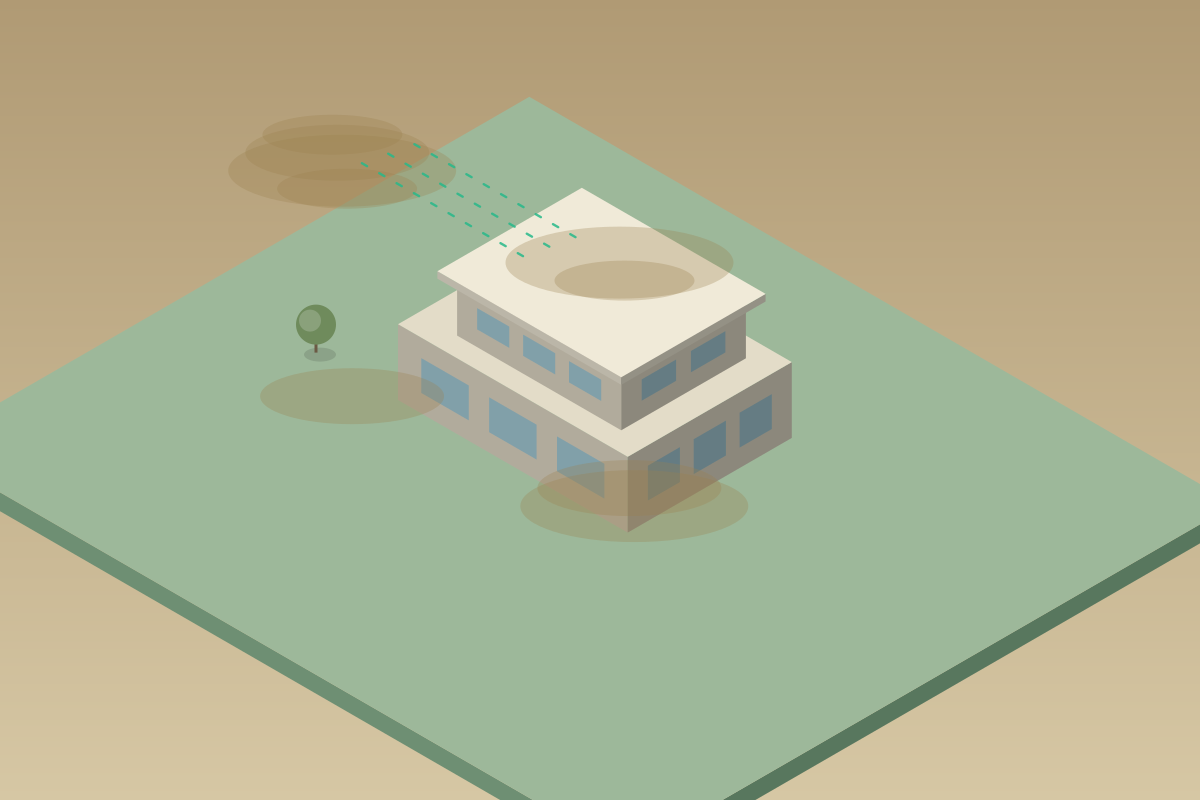
Every winter, Lahore’s skies turn a familiar grey-brown. The smog that settles over the city is easy to see outdoors — but many homeowners assume that once the doors and windows are shut, the air inside is safe. In reality, indoor air is shaped by the building itself: how tightly it is sealed, how it is ventilated and how its air is filtered.
How smog gets indoors
Fine particles known as PM2.5 are small enough to travel with air through very small gaps. Homes are rarely airtight. Particles can enter through:
- Gaps around windows, doors and service penetrations
- Open doors and windows used for ventilation
- Unfiltered fresh-air openings and extractor fans
- Air-conditioning systems that draw in or mix unfiltered air
Once inside, particles settle on surfaces and are re-suspended every time someone walks through a room, so indoor levels can stay elevated long after outdoor air improves.
Why a standard split AC is not an air-quality system
Conventional air conditioners are designed to control temperature, and to a lesser extent humidity. Their filters are typically basic mesh screens intended to protect the equipment — not to clean the air you breathe. Air conditioning and air purification are different functions, and a building needs both to be considered together.
What engineered clean-air design looks like
A well-designed approach combines several elements:
- Filtered fresh air. Outdoor air is introduced deliberately, through a filter bank, instead of leaking in unfiltered.
- Appropriate filtration. Filter stages are selected for the pollutants of concern, airflow and fan capability.
- Balanced ventilation. Supply and exhaust are planned so pressure relationships help keep unfiltered air out.
- Monitoring. Indoor sensors for PM2.5, CO₂, temperature and humidity show what is actually happening.
- Maintenance. Filters must be inspected and replaced; smog season can shorten replacement intervals.
What to expect — and what not to
Performance depends on the building’s leakage, system design, filter selection and maintenance. No system can promise a particular air quality outcome without a proper assessment of the building. That is why JOULE begins with understanding your home before recommending any solution.
Practical first steps
- Have your home assessed for air leakage and ventilation paths.
- Consider whether your existing HVAC can be upgraded with better filtration.
- For new builds, plan filtered fresh-air ventilation at design stage — it is far easier than retrofitting.
- Use an indoor air-quality monitor so you can see changes over time.
If you are planning a new home or upgrading an existing one, our engineers can walk you through the options — including our proposed JOULE Air360 whole-building air management concept.